
Data centers used to be almost invisible.
People used digital tools every day without thinking much about the buildings behind them. Email worked. Files opened. Banking apps loaded. The cloud felt simple because the physical side of it stayed out of view.
For many years, that was part of the appeal. Data centers helped move technology out of office closets and into facilities built for reliability. A small business no longer had to keep every important system running from a server room down the hall. It could use cloud services supported by infrastructure designed to stay online, recover from problems, and support growth.
That shift solved real problems.
Now the conversation has changed. Artificial intelligence has made data centers more visible. So have concerns about electricity demand, cooling, water use, local development, and the physical footprint of digital services.
The question is no longer only, “What is a data center?”
For many people, the better question is, “Why am I hearing about data centers everywhere now?
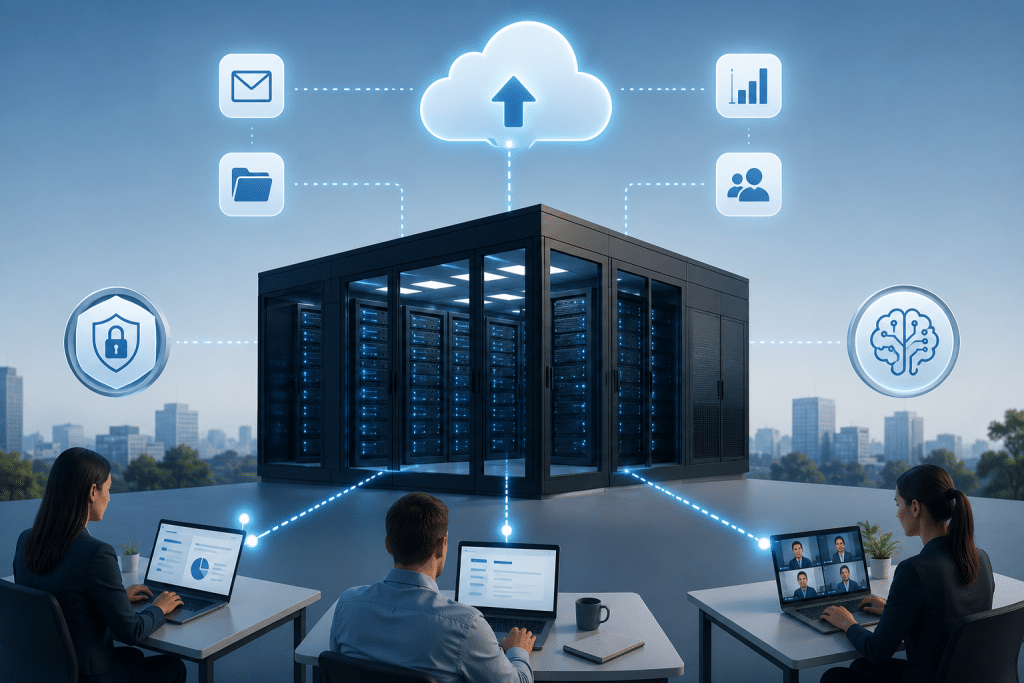
Data centers changed how businesses think about infrastructure
Before cloud services became common, many businesses managed more of their technology onsite.
A small company might have had a server room with racks of equipment, battery backups, and cooling. Someone had to monitor the hardware, replace failed parts, check backups, and respond when something went wrong.
That setup could work, but it carried real limits.
A long outage could drain the UPS batteries. Cooling problems could put equipment at risk. A missed backup might not be noticed until the company needed to restore a file. Even a small hardware failure could interrupt work if support or replacement parts were not available quickly.
Cloud services changed the responsibility. Instead of depending only on equipment inside one office, a business could use systems supported by larger facilities and specialized teams. A local power issue did not always have to stop work. Recovery options could improve. Data could be protected in more than one place.
That does not make cloud infrastructure the right answer for every situation. It does explain why data centers became so important. They made stronger technology environments available to businesses that could not build or maintain them on their own.
So, what is a data center?
A data center is a facility that houses the systems behind digital services.
Inside are the servers and supporting equipment that store information, run applications, and move data across networks. The building is designed to keep those systems secure, connected, powered, and cool enough to operate safely.
The simplest way to understand it is this: digital tools still need physical infrastructure.
A file may open on your laptop in seconds, but it is stored somewhere. A cloud application may feel separate from your office, but it runs on real equipment. An AI tool may respond almost instantly, but the computing behind it requires power, cooling, and careful management.
That is what data centers provide. They are the physical foundation behind much of modern digital life.
Why data centers are suddenly getting more attention
Data centers have always used electricity. They have always needed cooling. Growth is what changed the public conversation.
Artificial intelligence is a major reason. AI systems can require a large amount of computing power, and that computing power has to live somewhere. As AI tools become more common, the facilities behind them are drawing attention from communities, utilities, regulators, and business leaders.
The concern is not only about technology. It is about impact.

A new data center can raise questions about local power capacity. Cooling methods may lead to questions about water use, especially in areas where resources are already under pressure. Communities may also ask what they receive in return for hosting a large facility.
These are not anti-technology questions. They are planning questions.
Data centers are essential, but they are no longer hidden. The public is starting to see the physical side of the digital world, and that changes the conversation.
The cloud was never weightless
The word “cloud” makes technology sound light. It suggests something flexible, easy to access, and separate from place.
In reality, the cloud depends on place.
Cloud services run through physical facilities. Data is stored in specific regions. Systems operate under specific security rules, privacy requirements, and availability designs. For a business, those details can matter.
A company may not need to know the exact building where every file is stored. It should understand the broader picture. Where data resides can affect security, compliance, access, and recovery. Some businesses may need information kept in certain regions. Others may need to think carefully about vendor policies, backup retention, or how quickly systems can be restored after an outage.
This is where cloud planning becomes practical.
The question is not whether cloud infrastructure is good or bad. The better question is whether the setup fits the business. A company should understand what it gains by moving systems offsite, what control it gives up, and what protections need to be in place.
A thoughtful cloud decision balances convenience with risk. It considers how people work, how sensitive the data is, how much downtime the business can tolerate, and what kind of support will be needed when something changes.
Not sure whether your cloud systems and backups are set up the right way?
Kateva can help you review what is in place and decide what should happen next.
The debate is not simply good or bad
It is easy to flatten the data center conversation into two sides.
One side sees data centers as essential infrastructure. The other focuses on power use, water concerns, land use, and community impact. Both perspectives can be true at the same time.
Data centers help support modern work. They make cloud services possible. They allow businesses to use systems that would be difficult to build alone. As AI grows, they are also becoming a more visible part of local infrastructure planning.
That visibility brings responsibility.
A large facility has real-world needs. It requires power. It generates heat. Its location can affect how a community thinks about utilities, development, and long-term planning.
The best conversation is not whether data centers should exist at all. It is how they should be designed, powered, cooled, located, and explained.
Businesses face a smaller version of the same question when they decide how much to move to the cloud. Convenience matters. So do security, cost, recovery, access, and control. The strongest decisions usually come from balance, not from assuming one model is always better.
What small businesses should take from this conversation
Most small businesses do not need to understand data center engineering.
They do need to understand that their digital tools depend on real infrastructure. That matters when a business chooses cloud platforms, backup systems, cybersecurity tools, or hosted applications.
Consider a company that once kept its systems in a small server room. The equipment was close by, which gave the business a sense of control. That control came with responsibility. Someone had to manage the room, keep the batteries ready, check backups, and respond when hardware failed.
Cloud services can reduce some of that burden. They can make it easier for a business to keep working during a local outage. They can also improve redundancy when data is stored and protected correctly.
Still, moving to the cloud should not be treated as a shortcut around planning.
A business should know which systems are essential. It should understand who can access them. Backup and recovery should be tested before a crisis. Data location should be considered when security, privacy, or compliance requirements matter.
Those are practical questions, not technical luxuries. They help a business avoid surprises later.
Not sure whether your cloud systems and backups are set up the right way?
A practical cloud review can help clarify where your data lives, how it is protected, and whether your current setup matches the way your business actually works.
Using cloud infrastructure wisely
The goal for most small businesses is not to build their own infrastructure. It is to make good decisions about the infrastructure they rely on.
Sometimes that means keeping certain systems onsite. In other cases, cloud services offer more flexibility and resilience. Many businesses need a mix of both.
What matters is that the decision is intentional.
Cloud infrastructure can reduce the burden of managing hardware, but it does not remove responsibility for security, access, backup, vendor selection, or recovery planning. Onsite infrastructure can offer control, but it may create more exposure to local outages, equipment failure, and maintenance gaps.
Region and provider choices also matter. Where data is stored can affect privacy, compliance, recovery strategy, and risk. A business does not need to become an expert in every data center behind its tools, but it should have enough visibility to make informed decisions.
This is where an IT partner can help. The decision should not be based on hype or habit. It should be based on what the business needs, what risks exist, and what setup will support reliable day-to-day work.
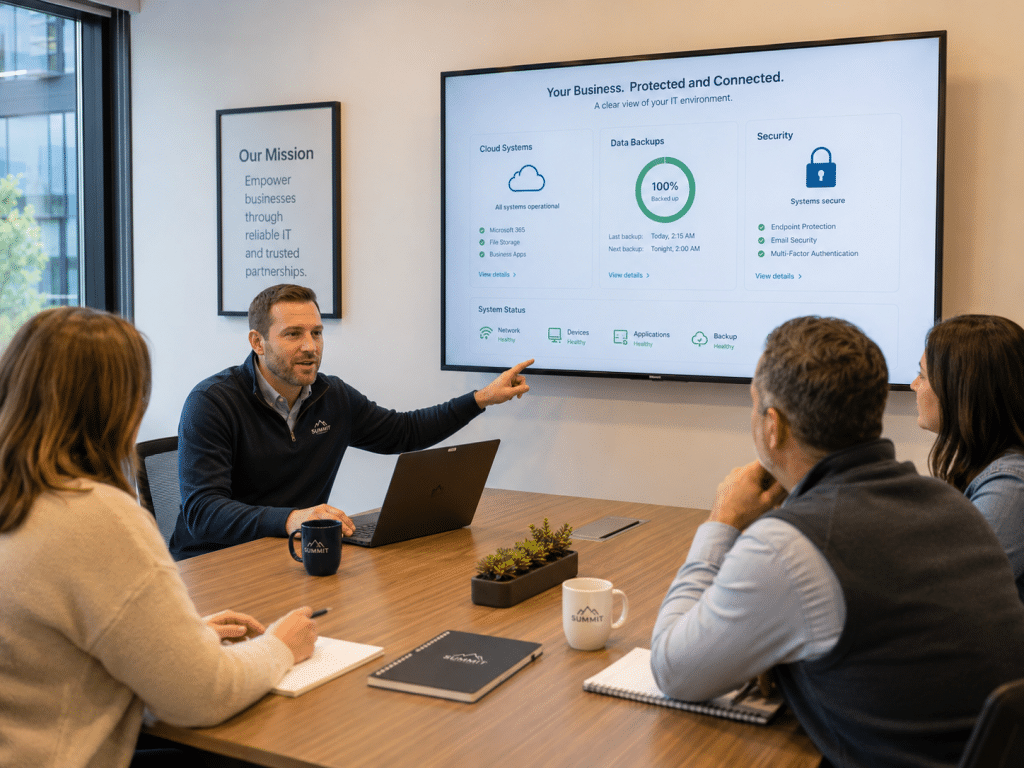
Data centers are essential, but no longer invisible
Data centers helped make the modern digital economy possible. They gave businesses access to stronger infrastructure and reduced the need for every company to manage all of its technology onsite.
AI has made the tradeoffs harder to ignore.
That visibility can be useful. It can lead to better questions from communities, better planning from technology providers, and better decisions from businesses that depend on cloud systems every day.
Understanding data centers does not mean becoming a technical expert. It means recognizing that digital services have a physical foundation. The cloud depends on infrastructure. AI depends on infrastructure. Business continuity depends on infrastructure that is planned, protected, and supported well.
For small businesses, the takeaway is simple: cloud decisions should be made with the full picture in mind. That includes convenience, cost, security, recovery, data location, and the impact of depending on infrastructure outside the office.
When those pieces are understood together, data centers stop being an abstract topic in the news. They become part of a practical conversation about how modern businesses work.