
Integrate Cloud services with On-Premise environment for improved continuity. Or go 100% virtualized!
- Microsoft Partner
- Microsoft Azure
- M365 Business Management
- Google Workspace Provider
Exploring the Benefits of Cloud Solutions
Cloud solutions are transforming how we store, access, and manage data. They offer a flexible and scalable approach to IT infrastructure.
Businesses and individuals alike are turning to cloud solutions for their many benefits. These include cost savings, enhanced security, and improved collaboration.
Cloud storage and cloud computing are at the forefront of this digital revolution. They provide powerful tools for data management and processing.
With cloud solutions, you can access your data from anywhere in the world. This flexibility supports remote work and global collaboration.
As technology evolves, cloud solutions continue to drive innovation. They enable businesses to stay competitive and adapt to changing market demands.
What Are Cloud Solutions?
Cloud solutions encompass a range of services delivered over the internet. They replace traditional IT infrastructures with scalable, on-demand resources.
These solutions include cloud storage, cloud computing, and cloud services, each offering unique benefits. Businesses utilize these to enhance operations and efficiency.
Key features of cloud solutions involve:
- Scalable resource allocation
- Remote data access
- Pay-as-you-go pricing
Cloud solutions are a linchpin in digital transformation strategies. They enable organizations to leverage advanced technologies without heavy upfront investments.
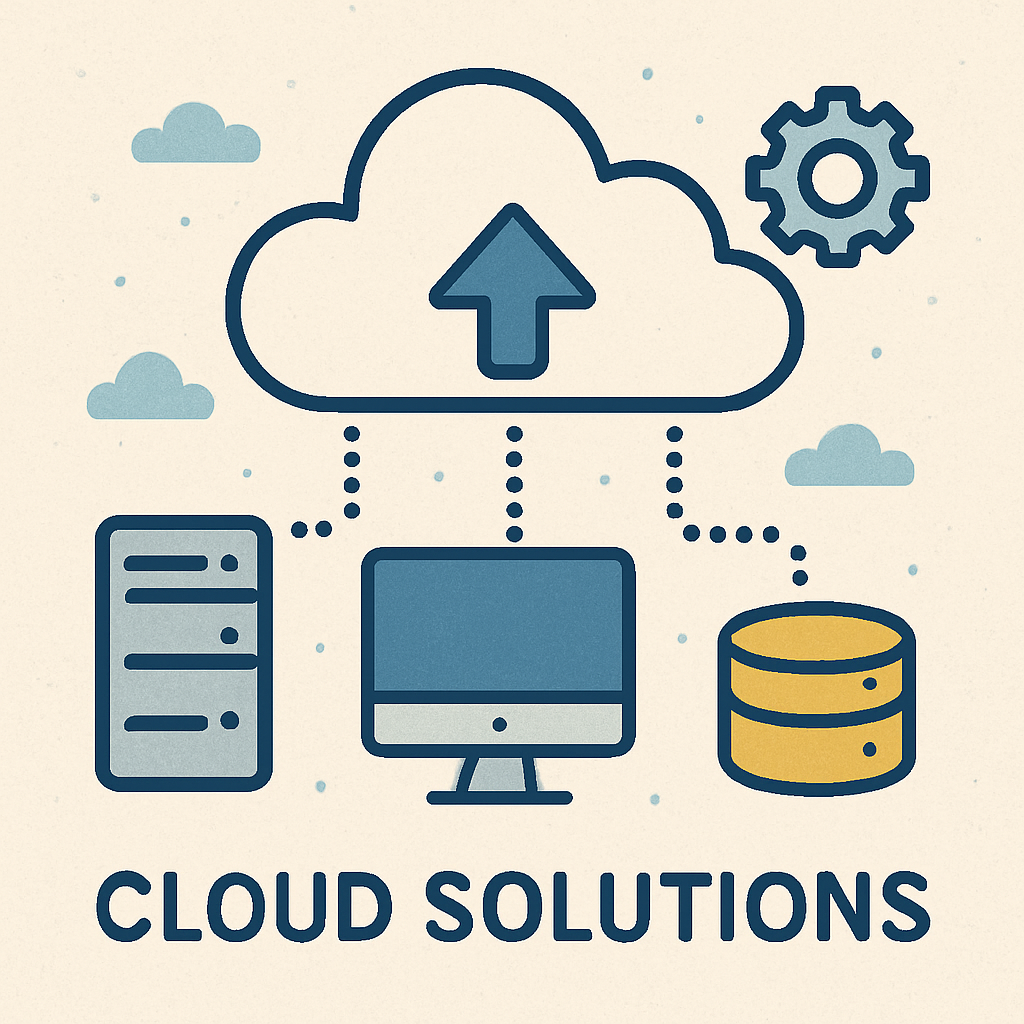
Key Types of Cloud Solutions: Cloud Storage and Cloud Computing
Cloud storage offers a modern approach to data management. It provides secure, cost-effective options for storing vast amounts of data. Unlike traditional storage, cloud storage scales easily with your needs.
In contrast, cloud computing delivers powerful computing resources over the internet. It eliminates the need for physical hardware investments. Businesses can access computing power on demand, improving flexibility.
Both cloud storage and cloud computing bring their own set of advantages. They offer:
- Increased flexibility and scalability
- Enhanced collaboration capabilities
- Access to advanced technologies
Businesses leverage cloud storage to enhance data access and sharing. Cloud computing supports varied applications, from AI to machine learning. Together, they are pivotal in enabling modern, agile operations.

Top Benefits of Cloud Solutions for Businesses and Individuals
Cloud solutions offer numerous benefits, making them indispensable in today’s digital age. Businesses and individuals alike can enjoy enhanced efficiency and reduced costs. By adopting cloud technologies, users gain access to scalable resources.
One significant advantage of cloud solutions is cost savings. Businesses no longer need to invest heavily in physical IT infrastructure. The pay-as-you-go model ensures expenses align with actual usage, optimizing budgets.
Another notable benefit is enhanced collaboration. Teams can work together seamlessly from different locations, accessing shared documents and tools in real-time. This fosters productivity and innovation, important for competitive advantage.
Data protection is also a key benefit. Cloud services often include automatic backups and robust security measures. This reduces the risk of data loss and unauthorized access, ensuring peace of mind.
Moreover, cloud solutions support rapid deployment of applications and services. This agility allows businesses to respond quickly to market changes and customer demands. Fast implementation is crucial in today’s fast-paced business environment.
Lastly, cloud solutions can enhance customer experiences. Quick service delivery and innovative offerings can significantly boost customer satisfaction. Embracing cloud technologies positions businesses to thrive in a digital economy.
- Cost savings
- Enhanced collaboration
- Improved data protection
- Rapid deployment capabilities
- Better customer experiences
How Cloud Solutions Drive Digital Transformation
Cloud solutions play a crucial role in digital transformation by enabling the adoption of new technologies. They provide businesses with the flexibility to innovate and adapt quickly. This agility is essential for staying competitive in rapidly changing markets.
With cloud computing, companies can integrate cutting-edge technologies like artificial intelligence and machine learning. These advancements support the development of smarter, more efficient processes. Businesses can harness data to make informed decisions that drive growth and efficiency.
Cloud solutions also simplify the deployment of new applications and systems. This ease of implementation accelerates digital initiatives, allowing businesses to transform their operations seamlessly. Embracing cloud technologies sets the stage for continuous innovation and evolution.
- Adoption of new technologies
- Integration of AI and machine learning
- Simplified deployment of applications
Security, Compliance, and Data Protection in the Cloud
Cloud solutions prioritize the protection of data through robust security measures. Providers often implement advanced encryption techniques and access controls to safeguard information. This ensures sensitive data remains protected from unauthorized access.
Compliance with industry standards is another strength of cloud services. Providers typically support various regulatory requirements that businesses must meet. This reduces the burden on organizations to maintain compliance on their own.
Data protection is further enhanced by automatic backup and recovery features. Cloud services ensure that data is regularly backed up, reducing the risk of data loss. In the event of a disaster, recovery options are readily available to restore critical information.
- Encryption and access controls
- Compliance with regulatory standards
- Automatic backup and recovery
Real-World Applications and Use Cases
Cloud solutions have transformed how businesses and individuals operate. From e-commerce to healthcare, the impact is widespread. Companies leverage these technologies to innovate and remain competitive.
In the business sector, cloud computing supports data analytics and real-time insights. This allows companies to make informed decisions based on accurate information. It enhances operational efficiency and boosts productivity.
The flexibility of cloud storage is particularly beneficial in education and research. Students and researchers can access resources anytime, anywhere. This ease of access promotes collaboration and accelerates knowledge sharing.
In the realm of IoT, cloud solutions enable seamless integration and data management. Smart devices connect and communicate effectively. This drives advancements in smart city projects and home automation.
- E-commerce and healthcare innovations
- Real-time data analytics
- Educational and research benefits
- IoT and smart city projects
Choosing the Right Cloud Solution for Your Needs
Selecting the ideal cloud solution requires understanding your unique requirements. Consider both the present and future needs of your business or project. This ensures scalability and flexibility.
Evaluate the different offerings from cloud providers. Compare their features, pricing models, and support services. Make an informed decision that aligns with your objectives.
- Assess current and future needs
- Compare provider features and pricing
- Ensure scalability and flexibility
Conclusion: Embracing the Future with Cloud Solutions
Cloud solutions continue to transform how we work and innovate. They offer unmatched flexibility, scalability, and security, making them indispensable tools in today’s digital age.
By embracing cloud technology, businesses and individuals can stay ahead in a rapidly evolving market. The future is cloud-based, and the possibilities are vast.